Hardware / Connected Device Development
Connected Device Development
Firmware, embedded software, the service behind the device, and the device itself — owned by one team, not split across three vendors who each blame the others when something does not work.
What this covers
- Device firmware and embedded software
- The backend the device reports to
- Mobile or web interface
- Physical device design, built here in prototype quantities
- Pre-compliance design for CE / FCC / EMC
- Field updates and recovery
Where connected-device projects go wrong
Rarely inside any one of the four layers. Almost always in the joint between two of them.
The device
HARDWARE
sensors, board, power, enclosure
FIRMWARE
what runs on it, unattended, for years
The service
BACKEND
where readings land and what happens to them
INTERFACE
the web or app somebody actually uses
What actually breaks at the seam
Protocol drift
The device sends one shape of message, the backend expects another, and each was right when it was written. Owning both means the change lands on both sides in the same afternoon.
Time and identity
Whose clock is authoritative, and how a reading is tied to the unit that took it. Cheap to decide early, expensive to retrofit once there is a year of data.
Updates and rollback
A device that cannot be updated safely is a device that will not be updated. A failed update has to end with a working unit, not a site visit.
Volume and cost
What the device sends, how often, and what that costs over a fleet. Usually the argument for computing more on the device and sending less.
We have done this to ourselves first
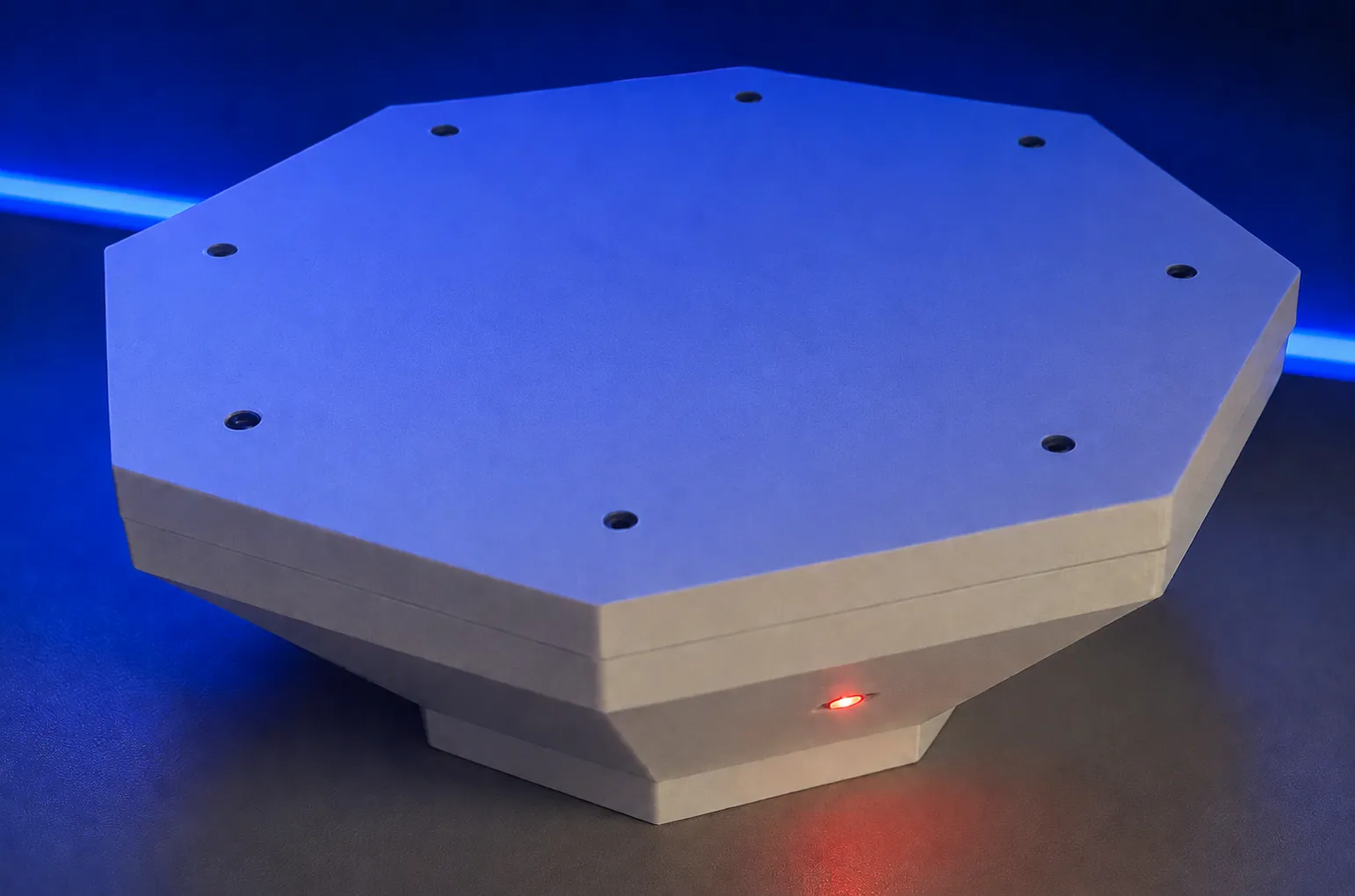
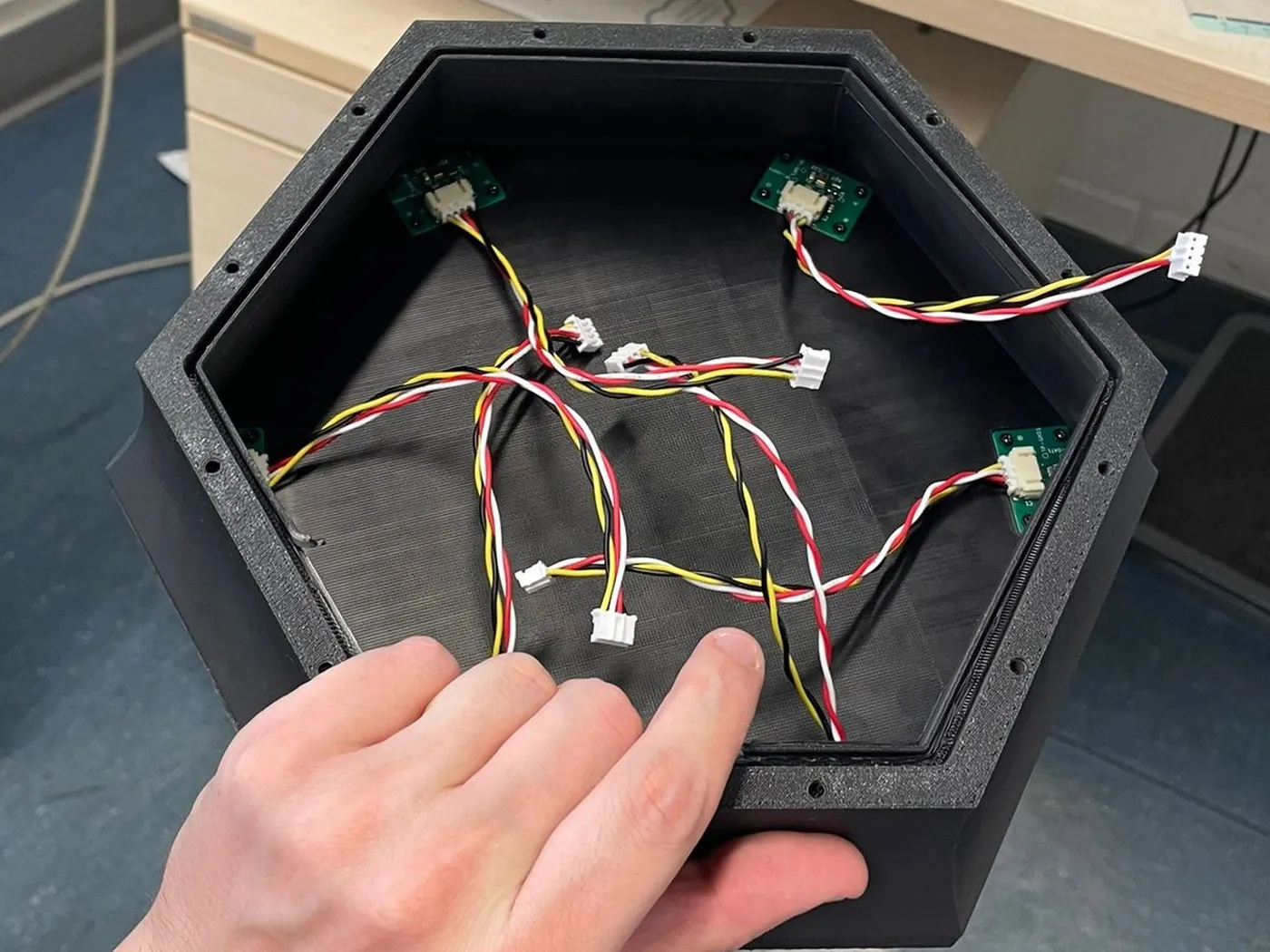
Our own product is a connected device: sensing hardware we designed, firmware we wrote, results computed on the node, and a second node held in the same time domain. Every seam in that list is one we have had to get right ourselves, in both directions, with nobody else to hand the problem to.
What we are not is a hosting company. We build the service your device reports to and hand it over running on infrastructure you own, with the documentation to keep it. Boards are assembled here in prototype quantities for development and testing, not at production volume — when a design is ready for series production we prepare the documentation and work with your manufacturer rather than pretending to be one. We design with CE, FCC and EMC in mind and prepare for testing; the formal testing is carried out by accredited third parties.
See the device and its measurements →Related
One product, four layers?
Bring whatever exists — a sketch, a spec, a board that half works, or an app with no device under it. You get an honest read on what the seams will cost and where the risk actually sits.
Discuss a project →