Hardware / Sensor System Development
Sensor System Development
Multi-sensor systems and processing that runs where the data is — array geometry, synchronization across devices, sensor fusion, and results computed on the device rather than shipped somewhere else to be worked out.
What we build
- Multi-sensor architecture and fusion
- Array geometry and sensor placement
- Distributed sensor synchronization
- Real-time signal processing
- Processing and results computed on the device
- Custom sensing pipelines for new applications
What a multi-sensor system has to solve
Sixteen microphones, two enclosures, one clock — and a source that has to land in the same place according to both.
Built and measured, not modelled
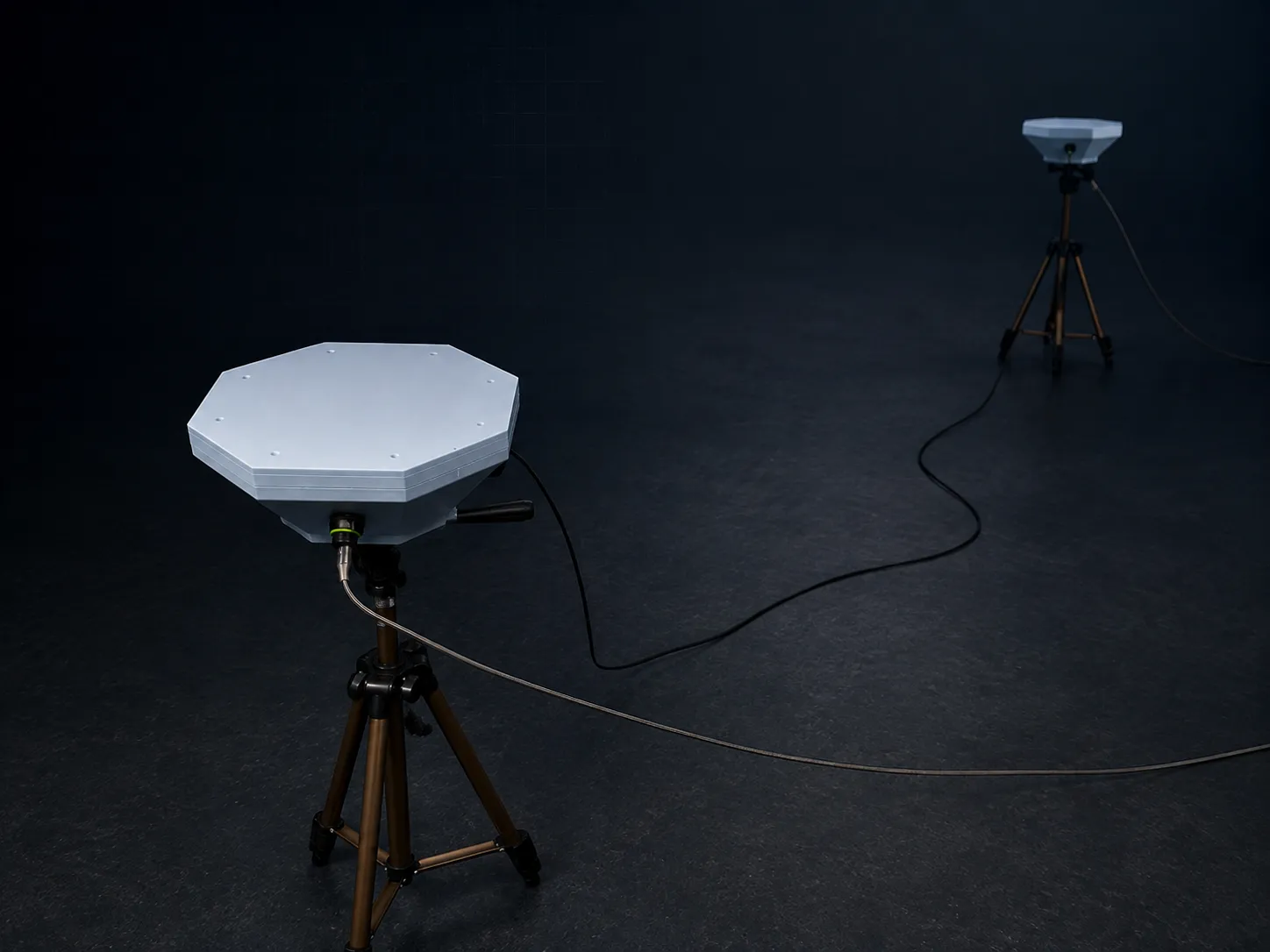
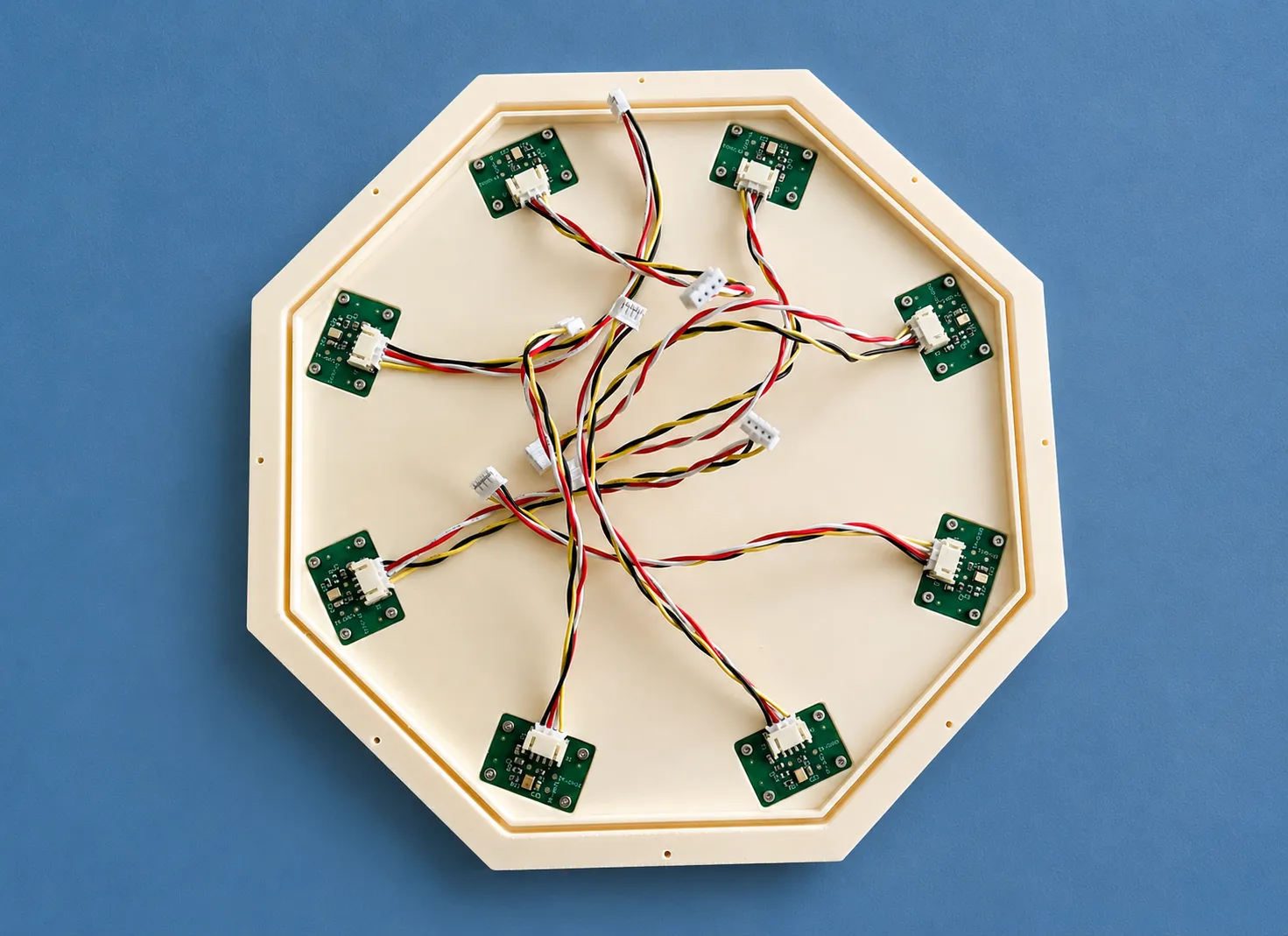
This capability comes out of building our own sensing product rather than out of a course. Eight microphones on one sampling clock, processing on the node, a second node held in the same time domain, and the whole thing checked against surveyed ground truth and an RTK-GPS-tracked target — with the results and their limits published rather than asserted.
The approach transfers directly to other sensor types. Vibration, pressure, current, optical, gas: what changes is the transducer and its conditioning. What does not change is the part that is hard — getting several sensors to agree in time, placing them where the physics wants them, and computing something useful on the device instead of shipping raw data off it.
See the measurements →Four problems, in the order they bite
Geometry
How many sensors, how far apart, in what arrangement. This is fixed in the mechanical design and cannot be improved later in software, which is why it gets decided first.
Synchronization
Sampling against one clock, and separate devices held in one time domain. Without it, comparing two sensors is comparing two guesses.
Conditioning
The analog or digital front end between the sensor and the converter, and the noise it does or does not add.
Fusion and processing
Combining the channels into something that means anything, in the time available, on the part you have — not on a workstation afterwards.
Related
Several sensors that have to agree?
Bring what you need to measure and how precisely. You get an honest read on whether the sensor count, the geometry and the timing budget can actually deliver it.
Discuss a project →